
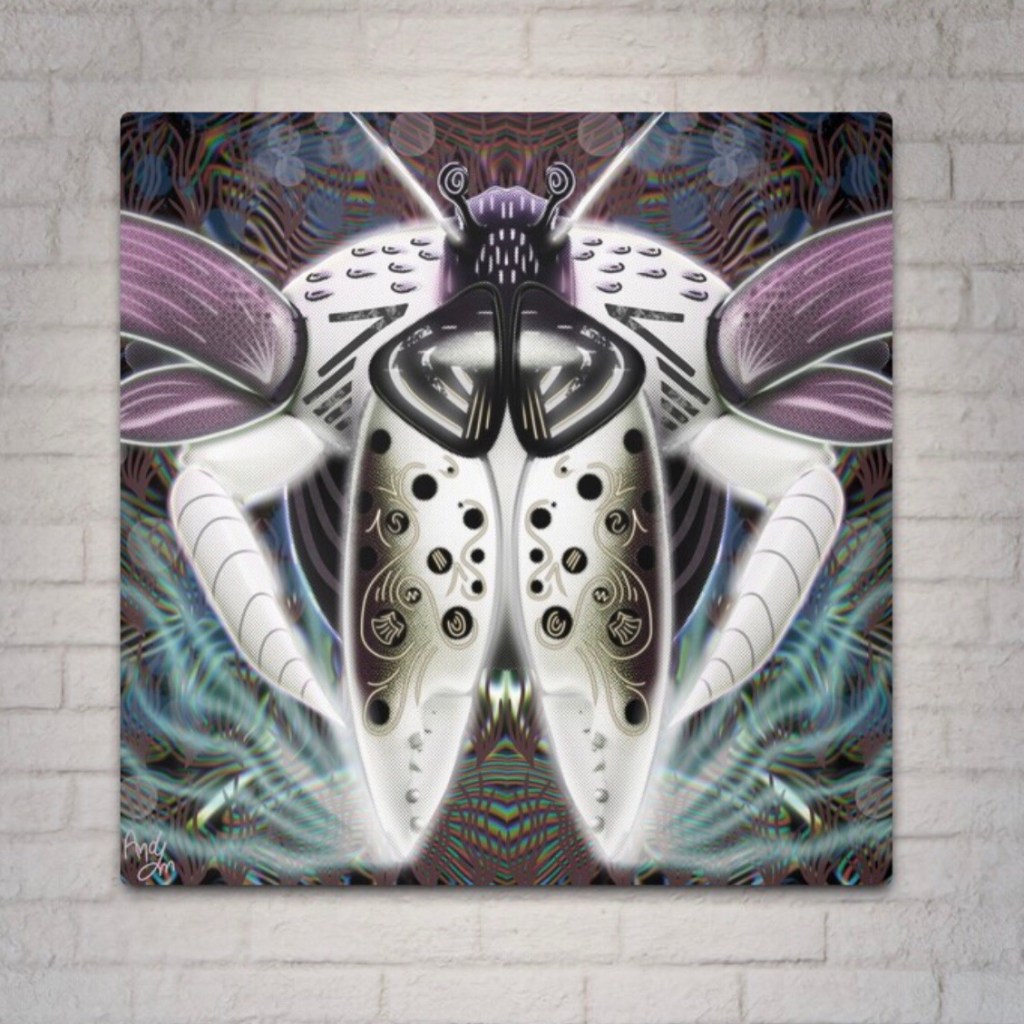
Originally drawn for my kids’ book Uncommon Animals of the Alphabet, this illustration aims to spotlight the extraordinary creatures inhabiting our planet, inspiring curiosity and a desire to protect them and their environments. But what if these creatures hailed from another world? Surely, that would capture everyone’s attention!
Imagine the thrill of a 1950s monster movie poster, with its bold colors and dramatic imagery, now featuring our very own coconut crab as an intergalactic visitor. This art piece reimagines the coconut crab as a cosmic creature, blending elements of nostalgia with modern artistic techniques.
In creating this piece, I experimented with a variety of styles, using AI-assisted textures as a foundation. I then illustrated over these textures, layering multiple dimensions to create depth and intrigue. The result is a striking combination of textures and glowing line work, a brand-new style that has quickly become a favorite of mine.
This piece isn’t just about reimagining the coconut crab as an alien but also about exploring the boundaries of creativity. By pushing the limits of traditional illustration and incorporating digital enhancements, I aim to draw attention to these unique animals and spark conversations about conservation and the wonders of our world.
Hang this artwork in your space and let it transport you to a universe where the coconut crab reigns supreme as a cosmic curiosity, reminding us of the incredible diversity and beauty that exists right here on Earth.
What’s the most money you’ve ever spent on a meal? Was it worth it?
When asked about the most money you’ve ever spent on a meal, it’s usually a story about indulgence, experience, and sometimes a touch of regret. But let’s flip the question and dive into something close to my heart: art. Why are some collectors willing to pay a hefty sum for art, and what can artists learn from this to create valuable work that allows them to thrive financially?
For many collectors, art is more than just decoration—it’s an investment. Art can appreciate in value over time, offering returns that rival or exceed more traditional investments. Collectors are drawn to works they believe will increase in value, whether due to the artist’s rising reputation, rarity, or historical significance. Artists can learn from this by building a strong personal brand and ensuring their work stands out in the crowded art world.
While financial gain is a factor, the emotional connection is often what seals the deal. Collectors invest in pieces that resonate with them on a personal level, evoking emotions or memories. This is why storytelling in art is crucial. When creating, consider the narrative your work conveys. Is there a story or emotion that viewers can connect with? Art that tells a compelling story or stirs deep emotions often commands higher prices.
The history and authenticity of a piece significantly affect its value. Collectors are willing to pay more for artwork with a well-documented provenance, particularly if it has been part of prestigious collections or exhibitions. Artists can enhance their work’s value by documenting their creative process, exhibiting in reputable galleries, and building relationships with curators and collectors who can vouch for their authenticity.
Rarity plays a significant role in an artwork’s value. Limited edition prints, unique pieces, or art by an artist with a limited output can drive prices up. As an artist, consider the balance between producing enough work to meet demand and maintaining exclusivity to keep your work desirable.
An artist’s reputation can greatly influence the value of their work. Artists who are seen as innovative or trendsetting often command higher prices. Building a strong online presence, networking within the art community, and receiving recognition through awards or exhibitions can enhance your reputation. Think of it like creating a buzz—collectors want to be part of an artist’s journey, especially if they believe you’re the next big thing.
Art that captures a moment in time or reflects cultural shifts can become incredibly valuable. This is why some collectors pay top dollar for works that challenge societal norms or encapsulate significant historical events. When creating, consider how your work fits into the broader cultural or historical context. Art that makes a statement or sparks conversation can attract discerning collectors willing to invest.
For some collectors, the thrill of acquiring a sought-after piece is part of the allure. They relish the hunt for elusive artworks that complete their collection or symbolise their success. As an artist, creating a sense of mystery or scarcity around your work can heighten its appeal. Limited releases, exclusive shows, or engaging directly with your audience through social media can build anticipation and desire.
While the most expensive meal might leave you with a fleeting sense of indulgence, investing in art offers collectors a lasting experience, both emotionally and financially. For artists, understanding these motivations can guide you in creating work that resonates with collectors, ultimately helping you build a thriving, financially successful career.
Remember, art is not just about the final product; it’s about the journey, the connection, and the stories that you, as an artist, can tell through your work. Keep creating, keep pushing boundaries, and who knows? One day, your work might be the piece collectors are eager to pay top dollar for.
 Kids Book Illustrator Andy C Marshall