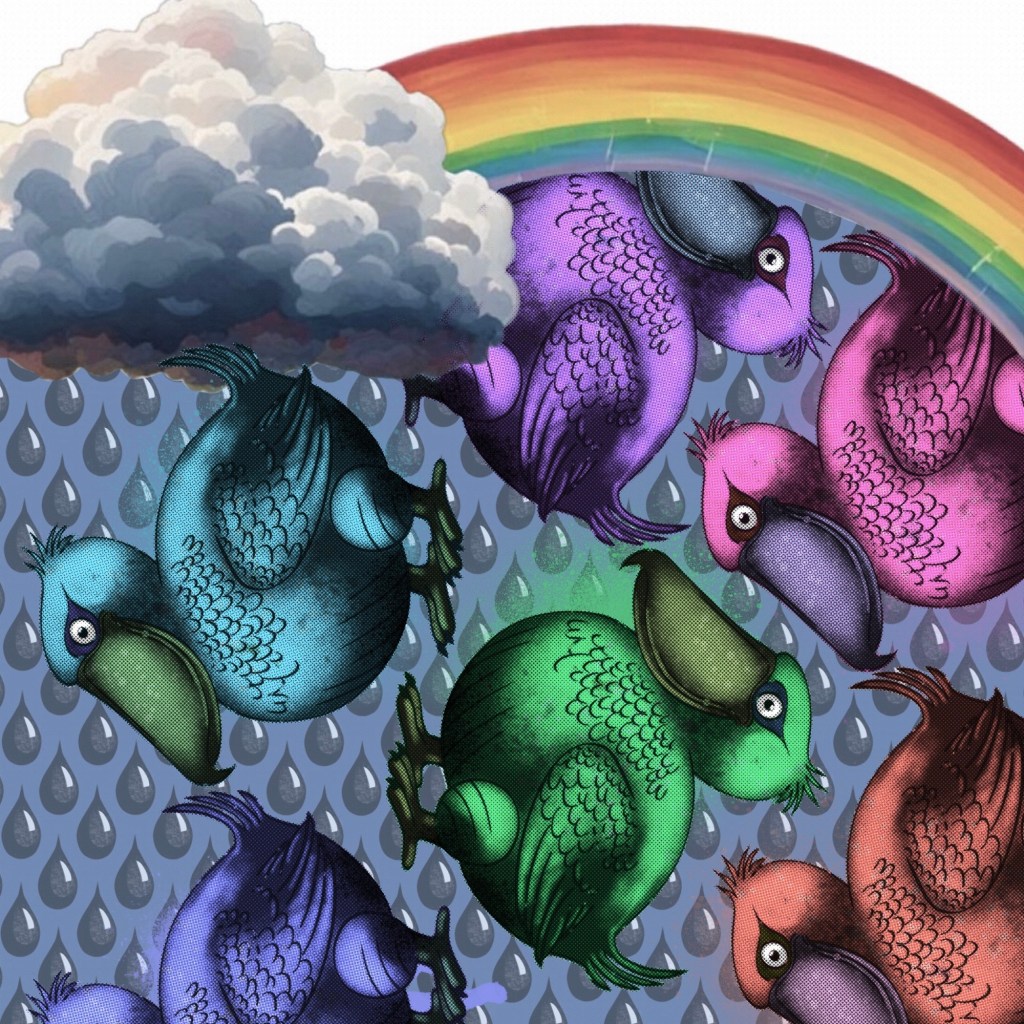
I recently came across a challenge by Gusto Hellmen on X (formerly Twitter). It’s not strictly a collaboration, but it operates in the exciting gray area between a collab, a challenge, and a competition. The task? Take an image of a storm cloud and rainbow provided by Gusto and integrate it into an original piece of art, minted on the ZeroOne platform by Sunday night.
This challenge inspired me to explore the fleeting beauty of rainbows, blending their momentary colors with the theme of species that come and go through time—highlighting the tragic cycle of extinction. Animals, much like the colors of the rainbow, appear and disappear, leaving behind only a memory of their brilliance. This theme resonates deeply with my environmental focus, and the resulting work wouldn’t have existed without this prompt. It’s a powerful example of how working with others—whether directly or indirectly—can ignite fresh ideas and lead to meaningful art.
Collaboration is about more than just combining skill sets. It’s about mutual inspiration, shared audiences, and tackling challenges together. Here are some reasons why thriving artists should consider working with others—and a few examples of how collaboration can create magic.
1. Creative Cross-Pollination
When two or more artists come together, they bring unique perspectives, styles, and skills to the table. This fusion can spark entirely new ideas that neither artist would have conceived on their own.
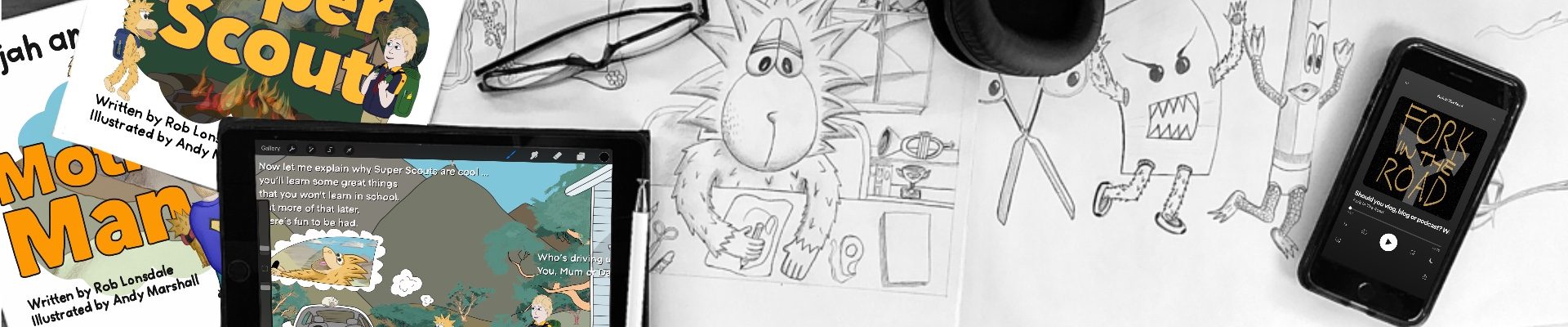
For instance, I once worked with YouTubers Elijah and Crumpet to illustrate Motivate Man, a kids’ book raising awareness about Down syndrome. Their storytelling expertise combined with my visual art created a product that was greater than the sum of its parts. Their narrative inspired my illustrations, and my illustrations brought their story to life. It was a creative back-and-forth that pushed me beyond my comfort zone—and made me a better artist.
2. Shared Audiences, Amplified Reach
Artists often struggle to grow their audiences. By collaborating, you tap into each other’s networks and expand your reach. Imagine a sculptor teaming up with a digital artist to create an interactive art installation. The sculptor’s followers are exposed to the digital artist’s work, and vice versa.
Take a look at Gorillaz, the animated band created by Blur’s Damon Albarn and artist Jamie Hewlett. Albarn’s musical genius paired with Hewlett’s edgy visual style birthed a multimedia project that appealed to fans of both art and music. The collaboration gave both artists a wider audience while breaking the mold of traditional artistic boundaries.
3. Learning Opportunities
Working with others is an incredible learning experience. It exposes you to new techniques, workflows, and ways of thinking.
A perfect example is when artists collaborate in workshops or live projects. During one of my podcast interviews with a fellow artist, they shared how mural projects brought together painters, graffiti artists, and illustrators, each teaching the others something new. From color theory to spray-painting techniques, the shared knowledge was transformative.
4. Shared Resources and Reduced Costs
Collaborations can be a smart way to share resources. Renting gallery space, printing limited edition pieces, or launching a joint online store becomes more feasible when costs are split.
For example, I’ve dreamt of creating a line of groovy arty sneakers featuring my salamander wallpaper design. Partnering with a shoe designer could make this dream a reality, as we’d share the workload and production expenses. It’s a win-win situation that makes ambitious projects achievable.
5. Support and Encouragement
Let’s face it—art can be a lonely and financially uncertain path. Having a collaborator means having someone in your corner who understands the highs and lows of the creative journey.
This support is invaluable, especially when tackling big projects. During the creation of my kids’ book Uncommon Animals of the Alphabet, I leaned on friends and fellow creatives for feedback and encouragement. Their input improved my work, and their belief in me kept me going.
Collaboration in Action: A Hypothetical Example
Imagine this: a digital artist specializing in black-and-white op art (hello, that’s me) teams up with a textile designer. Together, they create a line of home goods featuring optical illusion patterns—cushions, rugs, and wallpapers that transform any room into a visual wonderland.
The textile designer brings expertise in materials and production, while the digital artist ensures the patterns are hypnotically captivating. The result? A product line that neither could have achieved alone and an audience that spans art enthusiasts and interior design fans alike.
Final Thoughts
Collaboration isn’t just a strategy for success—it’s a way to grow as an artist and connect with others in meaningful ways. It’s about stepping out of your comfort zone and discovering new possibilities.
If you’re an artist looking to thrive, consider reaching out to someone whose work you admire. Whether it’s a mural project, a kids’ book, or a funky sneaker design, collaboration could be the key to your next big breakthrough.
Who knows? Maybe our paths will cross in a future project. Let’s create something extraordinary together.
 Kids Book Illustrator Andy C Marshall