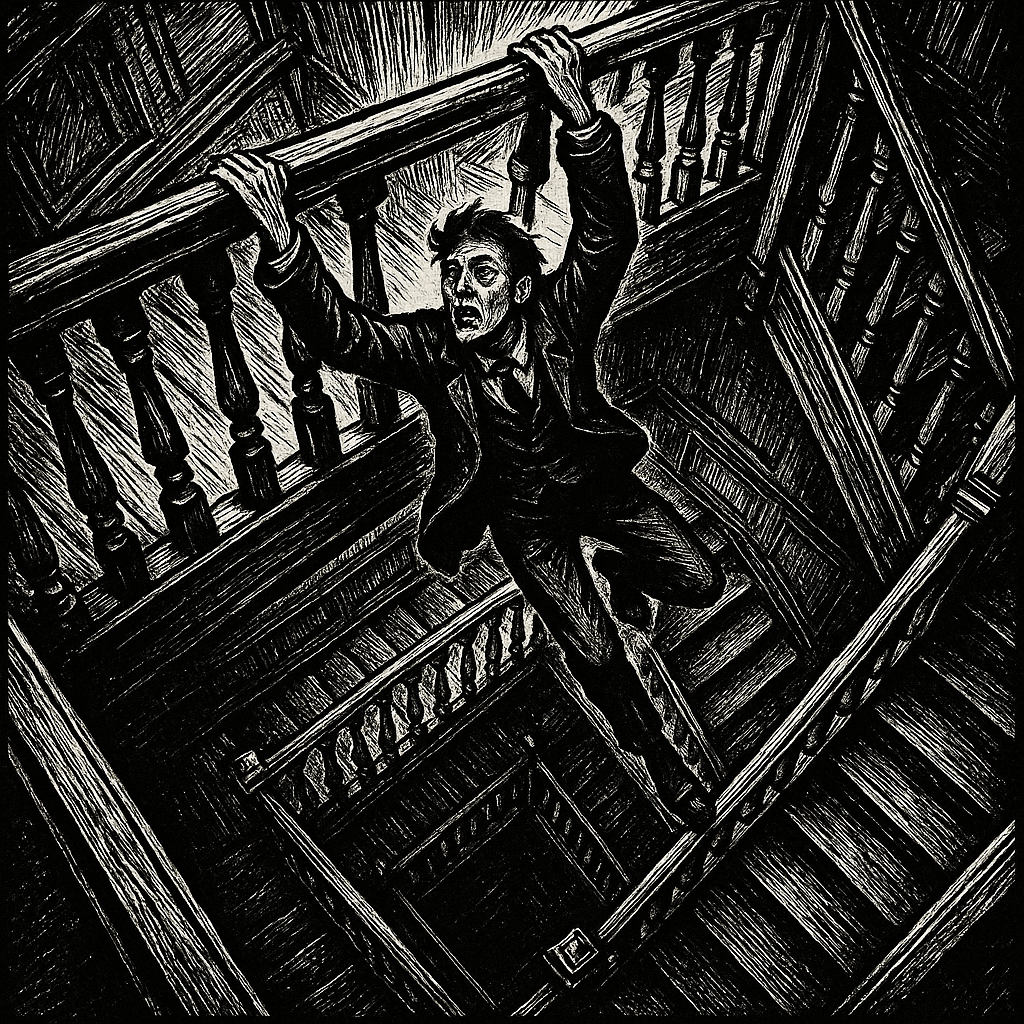
My favourite historical figure?Without hesitation: Salvador Dalí, the moustachioed maestro of the surreal. And it’s no surprise, really. His obsession with dreams, the subconscious, and the bizarre feels deeply aligned with my own creative practice, especially in my Visual Dream Journal project, like the piece “Quick Way”, where I recount my dreams, retell them as best I can, and then use AI to reimagine them visually. This piece, “Quick Way”, with its frantic figure suspended mid-air over an impossible staircase, was born from a vivid dream, filtered through memory, sketchbook, and then AI. It now exists as a digital collectible on the Zero One NFT platform, drifting, like all dreams do, in the ether.
Who is your favorite historical figure?
Dalí took the dream world seriously. He’d nap with a key in hand, dangling it above a metal plate so that the clang would wake him just as he slipped into sleep—a technique to harness that raw, fleeting creativity between waking and dreaming. The imagery he pulled from those micro-naps—melting clocks, lobster telephones, giraffes on fire—still feels more alive than most modern gallery walls.
I can’t help but see a parallel. Where he dipped into his dreams and dragged out weird wonders by hand, I now experiment by retelling my dreams and reanimating them through AI—today’s equivalent of surreal dreamwork tools.
The artist as art: Dalí’s brand of madness
Dalí was more than a painter; he was a walking piece of performance art. With his gravity-defying moustache, outrageous outfits, and theatrical interviews, he turned the role of the artist into a spectacle. He built a personal brand that didn’t shy away from the eccentric—it celebrated it.
That kind of public persona resonates with me too. As an artist straddling podcasts, books, visual art, and NFTs, I see the value in embracing your quirks and letting them shine outwards. Weirdness isn’t a weakness; it’s a signal.
AI as dream machine
So what would Dalí think of today’s AI tools? I reckon he’d love them. He embraced holography and early computer graphics long before most traditionalists would dare. Tools like Midjourney and DALL·E feel like dreams made visible in seconds, spitting out surreal, sometimes unsettling imagery that mirrors the unconscious.
When I feed my retold dream fragments into AI, I’m not trying to copy Dalí—but I am continuing the tradition of exploring the dream world as raw material. Like Dalí, I want to turn the ephemeral into something concrete—even if it’s digital, collectable, and coded into a blockchain.
What Dali taught me
- Dream deeply and unapologetically
- Celebrate your strangeness
- Market your art like it’s part of the art
- Use whatever tools help you translate imagination into reality
So yes—Salvador Dalí is my favourite historical figure. Not just because he made great art, but because he turned his entire life into a canvas. He showed us that there’s no border between the subconscious and the studio, and that being an artist doesn’t mean fitting in—it means standing out, surreal and proud.
Just like the man in “Quick Way”, we’re all suspended somewhere between the known and unknown, climbing strange staircases in the mind. And if you want to own a fragment of that dream? You’ll find it floating on the Zero One platform, waiting for someone else who finds the bizarre beautifully familiar.
 Kids Book Illustrator Andy C Marshall