I’ve finally done it. I’ve recorded 100 of my dreams into a visual dream journal—with the strange and powerful help of AI. It’s been a journey into the absurd, the profound, and the surreal. What struck me most along the way is just how perfectly matched the randomness of dreams is with the randomness of AI. Like two ghosts shaking hands in a mirror.
Dreams are slippery things—impossible to pin down. But through this unexpected collaboration with machine learning, I’ve somehow managed to capture snapshots of that intangible realm. These aren’t polished illustrations or neatly told stories. They’re fractured, bizarre, and intensely vivid—just like the dreams themselves. The AI becomes my lucid companion, helping to reveal the hidden wells of my subconscious. It’s like pulling creative oil from the deepest parts of the mind, where logic fails and imagery reigns.
Fittingly, I’m keeping these creations as NFTs—floating in the blockchain ether, another intangible place that feels eerily similar to the dream world. Ghost files on ghost servers. A strange poetry.
But let’s talk about the real elephant in the studio: AI is controversial. It’s coming for everything—including our creative jobs. There’s no use pretending otherwise. The tide is rising, and we don’t get to hold it back. What we do get to choose is how we respond.
For me, I’ve got one toe in the AI pool. Maybe two. I’m experimenting, cautiously. Because I believe this fork in the roadmoment for artists isn’t just about resisting change—it’s about adapting ethically, thoughtfully, and courageously.
Sure, I’d prefer AI take over my housecleaning and leave the art alone. But being super clever (and frankly annoying), it’s going straight for our creativity. It mimics, distills, and remixes faster than we can blink. But here’s the hopeful bit:
AI can be a tool—not a thief.
Artists who survive (and thrive) in this new creative ecosystem won’t be the ones clinging to the past. They’ll be the ones asking better questions. They’ll use AI to:
- Prototype and storyboard faster.
- Develop reference images for larger traditional works.
- Generate dreamscapes, like I have, and explore ideas they never would’ve sketched out alone.
- Reach new audiences via algorithms and AI-assisted curation.
And above all, they’ll be the ones who still have something to say. Something personal. Something human.
I think the artists who will thrive in this new AI-augmented world are the ones who treat their creativity like a conversation, not a competition. The ones who use AI as a brush—not a crutch.
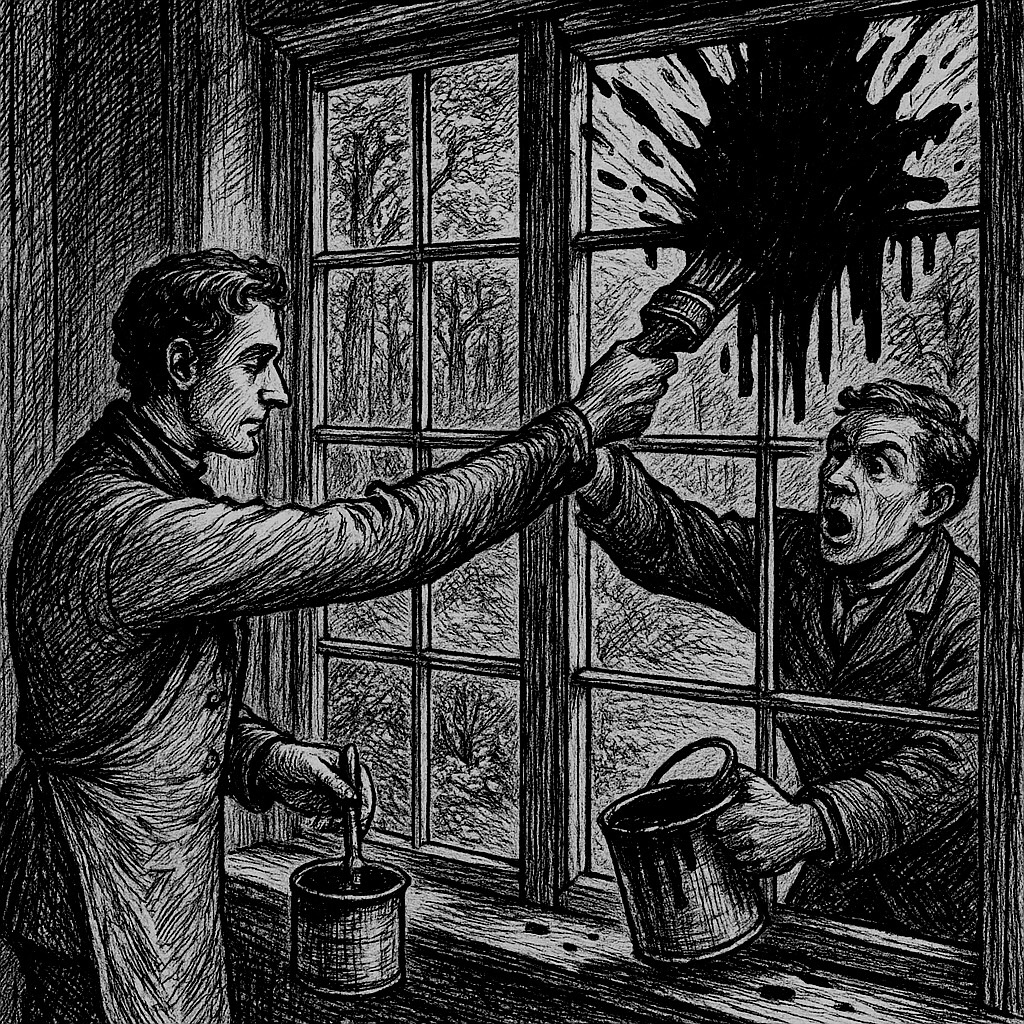
So here I am, standing in front of the proverbial window—carefully painting the frames, while the other guy (maybe AI itself?) throws a full bucket of black paint at the glass. We’re both inside. We both want to create. It’s messy. It’s chaotic. But it’s also kind of beautiful.
Let’s see what happens next.
 Kids Book Illustrator Andy C Marshall