I wake up before sunrise arguably the best time of day. No alarm. No doom-scroll. No corporate sirens screaming productivity into my skull. Just light, breath, birds, and the quiet hum of a day that hasn’t been ruined yet.
My phone is nowhere near me. It’s off. Dead to me until mid-morning. The only exception is if my wife is on the road or out at the farm and needs to call about a snake bite, a breakdown, or some other Australian-flavoured emergency. But this is a perfect day so everything would be fine anyway. That glowing parasitic rectangle can wait. This one habit alone makes me feel like I’ve hacked the matrix and escaped into the forest.
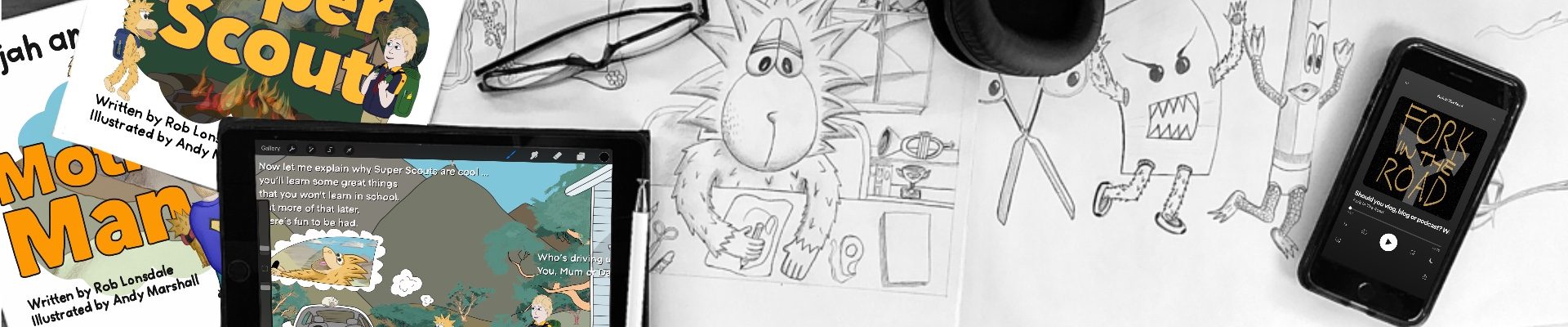
I slide into my studio, socks on polished floorboards, while the house is still asleep and make art the way it’s meant to be made: slowly, honestly, without witnesses.
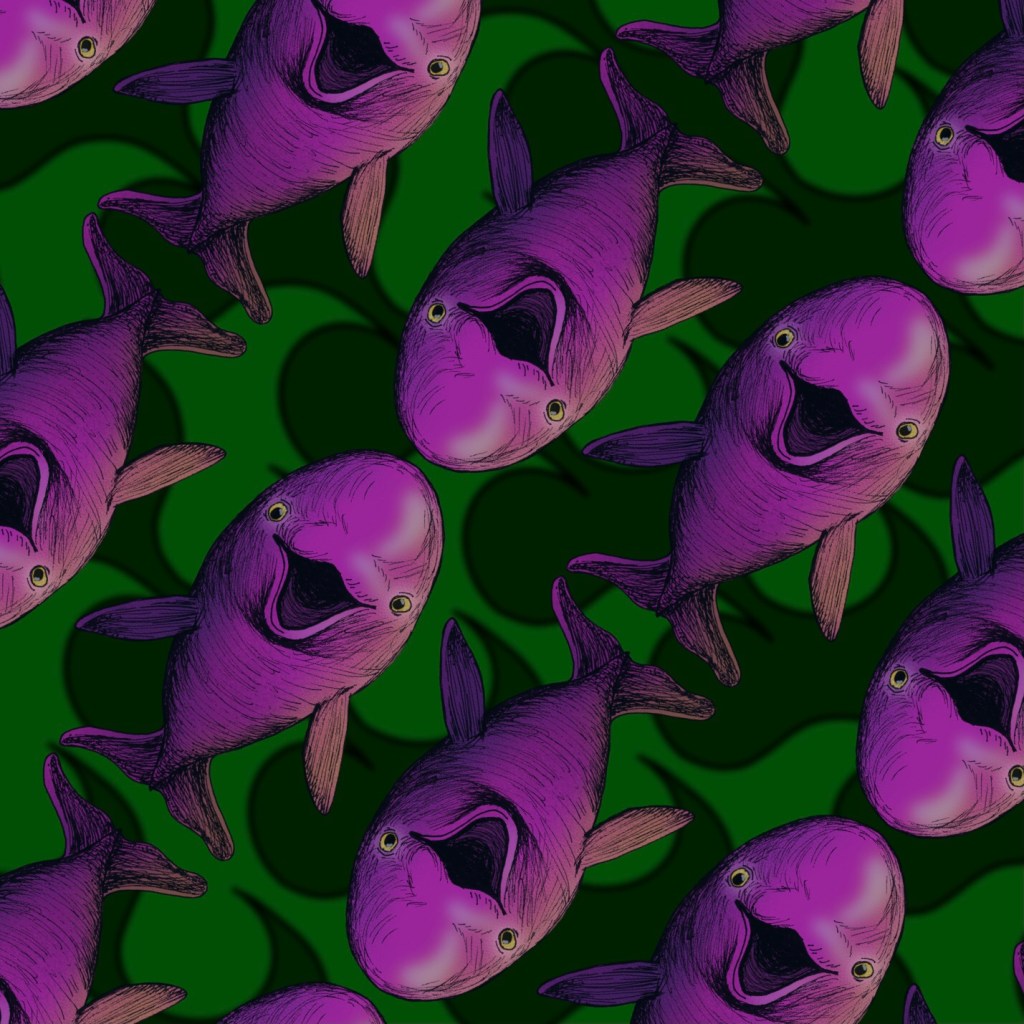
Ink hits paper. Lines breathe. Something strange and alive emerges, not content, not product, not “a piece,” but a living thing. Some mornings it’s a dream creature. Some mornings it’s another piece of my Uncommon Animals of the Alphabet, like the Yangtze finless porpoise wallpaper, quietly swimming its way into everyone’s awareness while the rest of the world is just starting to argue on the internet.
Describe your most ideal day from beginning to end.
Eventually, the house wakes up. Laughter leaks into the hallway. The kids drift in, half-dreaming, half-hungry, fully weird, exactly how kids should be. We make breakfast with real food: eggs from our chickens, herbs from the garden, fruit from the trees. Food that didn’t come from a plastic coffin.
My wife joins us. We sit. We eat. No screens. No rush. Just humans being humans in a kitchen that smells like life instead of stress.
Mid-morning, and only mid-morning, I turn my phone back on.
Not to scroll. Not to react. To receive.
Orders. Books. Wall art. Prints. Wallpapers. People around the world choosing uncommon animals, strange creatures, weird beauty, and rebellious art over beige walls and mass-produced nothingness.
I don’t hustle. I don’t beg. I don’t dance on social media for crumbs. My systems quietly do their thing while I live my actual life.
Then I see the news.
Not the usual apocalypse theatre. The good stuff.
Wars winding down. Forests regrowing. Endangered species stabilising. Plastic being pulled from oceans instead of shoved into them.
Not because corporations suddenly grew souls, but because enough people stopped waiting for permission and started acting like stewards instead of consumers.
The kids head outside. The land hums. Our farm isn’t “sustainable.” That word’s too polite. It’s regenerative. It gives back more than it takes. Soil gets richer. Birds come back. Bugs return. Life multiplies.
I get ready for the day’s podcast. Today’s guest is David Choe — raw, chaotic, brilliant, honest in a way most people are too afraid to be. We talk about art, survival, money, madness, and what it actually means to make a living without selling your soul to people who hate creativity but love profit.
The episode isn’t content. It’s a flare in the dark for other artists who are tired of being told they should starve to be “real.”
Lunch is another meal from the land. Then the farm shack café opens. Not a business,a gathering place. Coffee, conversation, ideas, kids running barefoot, people remembering they’re alive. Artists, farmers, weirdos, thinkers, builders, all crossing paths like a living ecosystem instead of a marketplace.
Then I head into the open studio.
No deadlines. No briefs. No trends. No algorithms. Just artists making things because their nervous systems demand it.
I make another piece, bold, strange, alive. I upload it. It sells. Not because I chased attention, but because I made something true.
Somewhere in the world, someone just claimed a piece of my nervous system and hung it on their wall. That never stops feeling surreal.
Then the kind of news that stops me mid-step:
Tasmanian devil facial cancer is cured.
A thriving population of Tasmanian tigers rediscovered in protected land — land partly funded by artists, not billionaires.
Turns out creativity isn’t a luxury. It’s a survival strategy for the planet.
Evening comes.
My wife and I go on a date. There’s a new Coen Brothers film, dark, absurd, beautiful, uncomfortable, perfect. We laugh at the wrong moments like proper people.
Back home, the kids are at the nature pool. A thunderstorm rolls across the ranges. Kangaroos graze nearby like nothing is happening, because for them, nothing ever really is, they’re just here, doing their thing, unbothered by human drama.
We jump in the water. Rain hits skin. The sky cracks open. It feels like being inside the planet instead of on top of it.
Dinner is wood-fired pizza made entirely from our own ingredients. Tomatoes, basil, homemade cheese, real dough. It tastes like effort, patience, and soil, which is to say, it tastes better than money.
We sit together. We talk. We laugh. No phones. No noise. No escape required because there’s nothing to escape from.
Later, I check my phone one last time.
Another artwork sold.
The night ends with stories, books, games, and kids who are obsessed with marine biology and forest walking and all the strange, beautiful things that still exist outside of screens.
My wife’s farm is thriving. My art is thriving. Our family is thriving. The land is healing.
I fall asleep knowing something radical:
Tomorrow doesn’t have to be better.
It already is.
 Kids Book Illustrator Andy C Marshall