The last thing I learned came from an animal most people barely think about, yet it carries the kind of stubborn intelligence that artists quietly admire. The honey badger lives in a world that tries to bite, poison, sting, and overpower it every day, and instead of shrinking it simply keeps moving through the chaos with a strange mixture of curiosity, toughness, and indifference to fear.

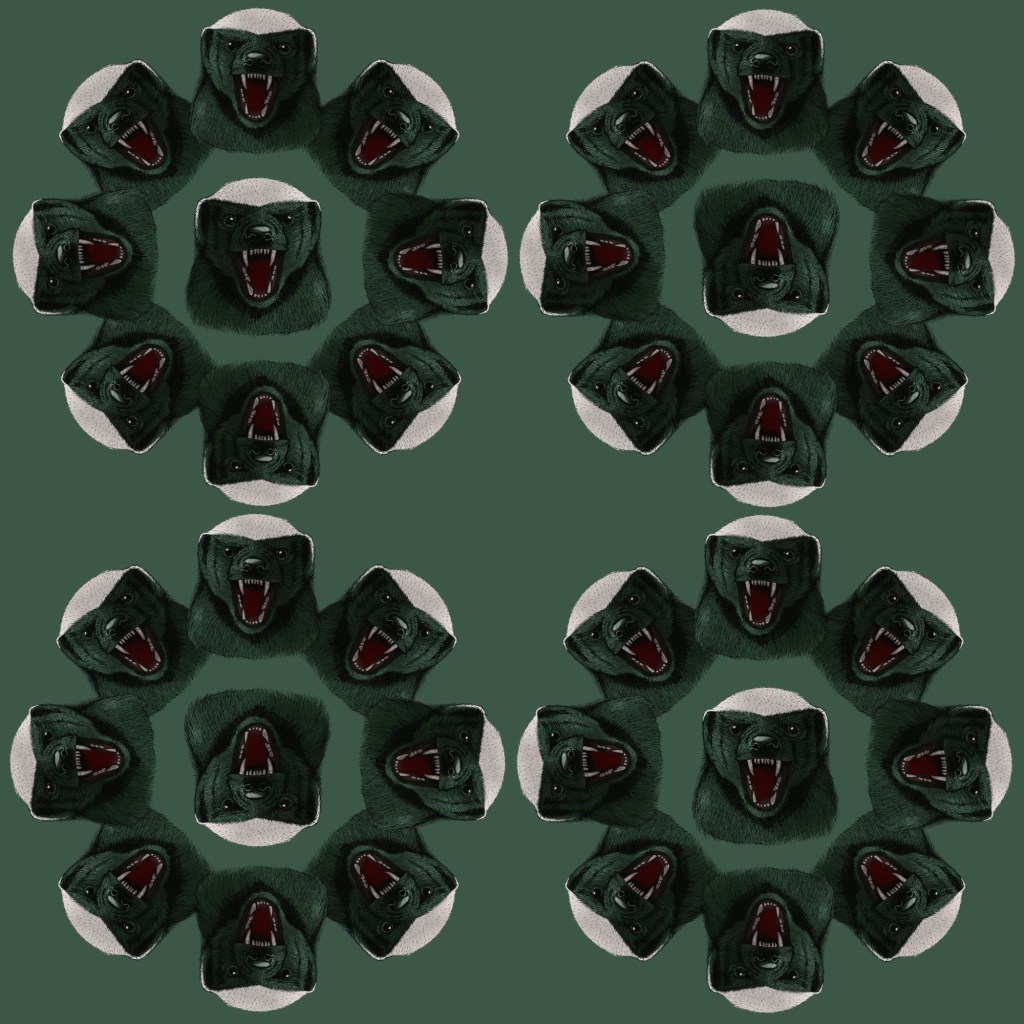
That spirit found its way into one of my pattern studies which eventually became a throw blanket. Pattern making has always felt like watching nature repeat itself through different lenses, like leaf veins, river systems, and animal markings all whispering the same design language. When I began drawing the honey badger I noticed the face carries a bold geometry, in high contrast, like a kind of living symbol. When repeated across fabric those shapes become something hypnotic, a quiet rhythm that turns a single creature into a field of pattern. Draped over a couch it feels a little like bringing a fragment of wild intelligence into the living room.
What is the last thing you learned?
Working with pattern often teaches small lessons about attention. At first you draw an animal as a subject, but after a while the animal becomes a shape, then the shape becomes a repeating structure, and suddenly you realise nature has been designing patterns for millions of years before any of us picked up a pen. The honey badger pattern on this blanket carries that idea. One animal becomes many, and many become a living tapestry of resilience.
Honey badgers are extraordinary creatures in ways that feel almost mythical. They have skin so loose and thick that if a predator grabs them they can twist around inside their own skin and bite back, which feels like something out of folklore rather than biology. They happily raid beehives despite being surrounded by angry bees, and they dig with such power that soil flies behind them like spray behind a boat. They also have a reputation for surviving snake bites that would kill most animals because their bodies can tolerate venom that would normally shut down the nervous system.
Even their attitude seems unusual for such a small carnivore. Honey badgers will stand their ground against animals far larger than themselves including lions and leopards. There is something quietly inspiring about that stubborn refusal to accept the expected hierarchy of the wild. Size does not always equal power and fear does not always equal wisdom.
Learning about them shifted something small in my thinking. The natural world is full of creatures that survive not because they are the strongest or the fastest but because they are relentless, adaptable, and a little bit unpredictable. That feels strangely familiar to anyone trying to build a creative life in a system that often rewards the loudest rather than the most meaningful work.
The honey badger on that blanket is not just decoration. It is a repeating reminder that resilience can look scrappy, persistence can look strange, and sometimes the most powerful response to a hostile world is simply to keep digging.

 Kids Book Illustrator Andy C Marshall
Great post
LikeLiked by 1 person
Thank you 😊
LikeLiked by 1 person