Sometimes I look around and think we have accidentally wandered into the plot of a ridiculous super villain movie, except there is no James Bond turning up at the last minute to blow up the secret headquarters and save everyone. There is no dramatic music, no evil mastermind stroking a cat while explaining the plan, no heroic moment where everyone suddenly realises what is happening. The strange part is that the villains, if you want to call them that, are often just boardrooms, spreadsheets and people chasing numbers on a screen while the real world quietly gets stripped away underneath them.
What bothers you and why?
That is the bit that feels completely absurd to me. We have created systems where the people with the most power are often the furthest away from the consequences of their decisions. Someone can approve a project, increase a profit margin or cut a cost without ever seeing the river affected, the community changed or the species that disappears because of it. The damage becomes someone else’s problem, somewhere else, later.
I think one of the biggest tricks pulled on us is convincing people that if they are struggling, it is because they personally failed. That if you cannot afford a house, if you are exhausted, if you are working harder than ever and still falling behind, then somehow you just need to work harder or become more disciplined. Meanwhile, massive systems are designed around extracting as much value as possible from everyone below them.
Artists know this feeling well. There is this romantic nonsense that struggling is part of being an artist. The starving artist myth is almost like a super villain origin story for creativity because it convinces the people creating beauty, culture and meaning that suffering proves they are genuine. It is a very convenient belief for everyone except the artist.
Nobody tells a farmer they are more authentic because they cannot pay their bills. Nobody tells a builder that being unable to survive means they must really love building. Yet artists are somehow expected to accept poverty as proof of dedication while other people profit from the culture artists create.
The internet was supposed to change that. We were told the gatekeepers were disappearing. The little guy could finally reach the world. And in some ways that happened, but then the giant machines arrived and built new gates.
Amazon is a perfect example. It is almost unbelievable what it can do. You can sit on a couch in rural South Australia and have almost anything delivered to your door. That is incredible. But the bigger question is what happens when convenience becomes the only thing we measure.
Small shops disappear. Local makers struggle. People who create things with care are forced to compete against systems built on enormous scale. Everything becomes faster and cheaper, but somewhere along the way we start losing the stories behind the things we buy.
Spotify is another strange example. We have created a world where almost every song ever recorded can sit in our pocket. That should be one of the greatest achievements in human history. Yet many musicians are still struggling to make a living from their work because the value has been squeezed out of the thing itself and redirected somewhere else.
It is like we built the biggest concert venue ever created and then told the musicians they should be thankful for the exposure while everyone else sells the merchandise.
Redbubble was another one that seemed like a dream. Artists could upload their work and suddenly reach customers all over the planet. It sounded like freedom. But the problem with these systems is that eventually the platform becomes more valuable than the people who create the thing that attracts everyone there.
The artwork becomes a file. The file becomes a product. The product becomes data. The artist becomes a tiny replaceable part in a giant machine.
That pattern appears everywhere. A forest becomes timber. A river becomes a resource. An animal becomes a number in a report. A person becomes a customer profile. Something alive gets reduced into something that can be measured, traded and extracted.
That is what makes it feel like super villain territory. Not because there is one person sitting in a volcano pushing a button marked “destroy the planet”. It is actually more disturbing than that. It is millions of tiny decisions all pointing in the same direction because the system rewards the people who take the most, not necessarily the people who care the most.
Meanwhile, outside my window here at Caltowie, the real world keeps doing its thing. The goats are still ridiculous. The ducks are still causing chaos. The trees are still growing slowly whether anyone notices or not. Nature does not care about quarterly reports or market share.
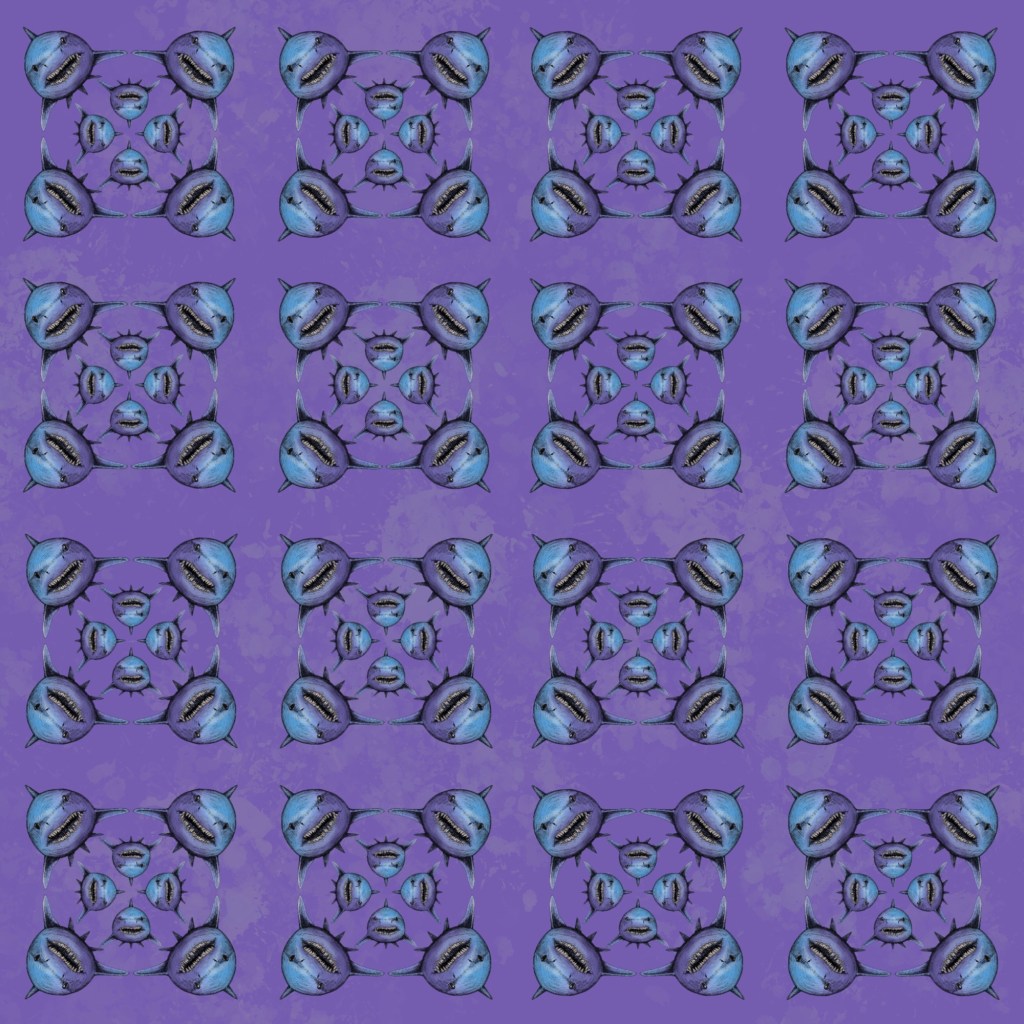
A ragged toothed shark does not need a marketing campaign to prove its worth. It has survived millions of years because it fits into a pattern far older than our economic systems. It is strange, beautiful and perfectly adapted, yet we live in a world where many people have never heard of it.
That seems backwards to me.
We are surrounded by incredible things and constantly distracted from them. We are shown endless arguments, endless advertising and endless things to consume while the living world quietly asks for our attention.
I am not pretending I have escaped this. I use the internet. I buy things. I am part of the same systems I question. I am not standing outside the castle throwing rocks at the walls. I am inside the castle trying to find a little room where something real can still be made.
Maybe that is why I keep drawing.
Because a drawing of a strange animal is a tiny act of remembering. It says, “Hey, look at this. This exists. This matters.”
Maybe art is not going to defeat the super villains.
Maybe there is no James Bond coming.
Maybe the only thing we can do is keep noticing, keep creating and keep pointing at the things worth protecting before they disappear behind all the noise.
 Andy C Marshall