
Sharks are one of the few animals that can still trigger a genuine, deep seated fear in me. Not a modern fear. Not the kind of fear that comes from opening a power bill or checking the balance of a mortgage. Sharks seem to reach much further back than that. They live somewhere down in the old wiring. Somewhere ancient. They turn up in my dreams more often than I would like, usually as a dark shape moving beneath me through water so deep I cannot see the bottom.
Maybe that is one reason sharks have been treated so badly throughout history. Fear has a habit of turning living creatures into villains. Once we decide something is frightening, we stop being curious about it. We stop asking questions. We stop looking closely. It is much easier to hate what scares us than it is to understand it.
The strange thing is that the more I learn about sharks, the more difficult it becomes to see them as monsters. They begin to look less like creatures from nightmares and more like miracles. Sharks have existed on this planet for hundreds of millions of years. They were already swimming through ancient oceans long before dinosaurs appeared. Entire ecosystems have come and gone. Continents have shifted. Species have risen, flourished and disappeared. Through all of that, sharks simply kept being sharks.
When I think about that, it fills me with a sense of wonder. Imagine surviving multiple mass extinctions. Imagine being so well adapted to your role in the world that you endure while countless other creatures vanish into history. Meanwhile, I become mildly inconvenienced when the internet drops out for ten minutes. Sharks put things into perspective.
What fascinates me most is how diverse they are. When people hear the word shark, they often picture a great white cutting through the water with dramatic music playing in the background. Nature, however, is far stranger than the movies. There are hundreds of shark species, ranging from tiny sharks that could fit comfortably in your hand through to whale sharks that grow larger than a bus. Some look sleek and elegant. Others look as though evolution was having a particularly experimental afternoon. The deeper you look into the shark family tree, the more bizarre and wonderful it becomes.
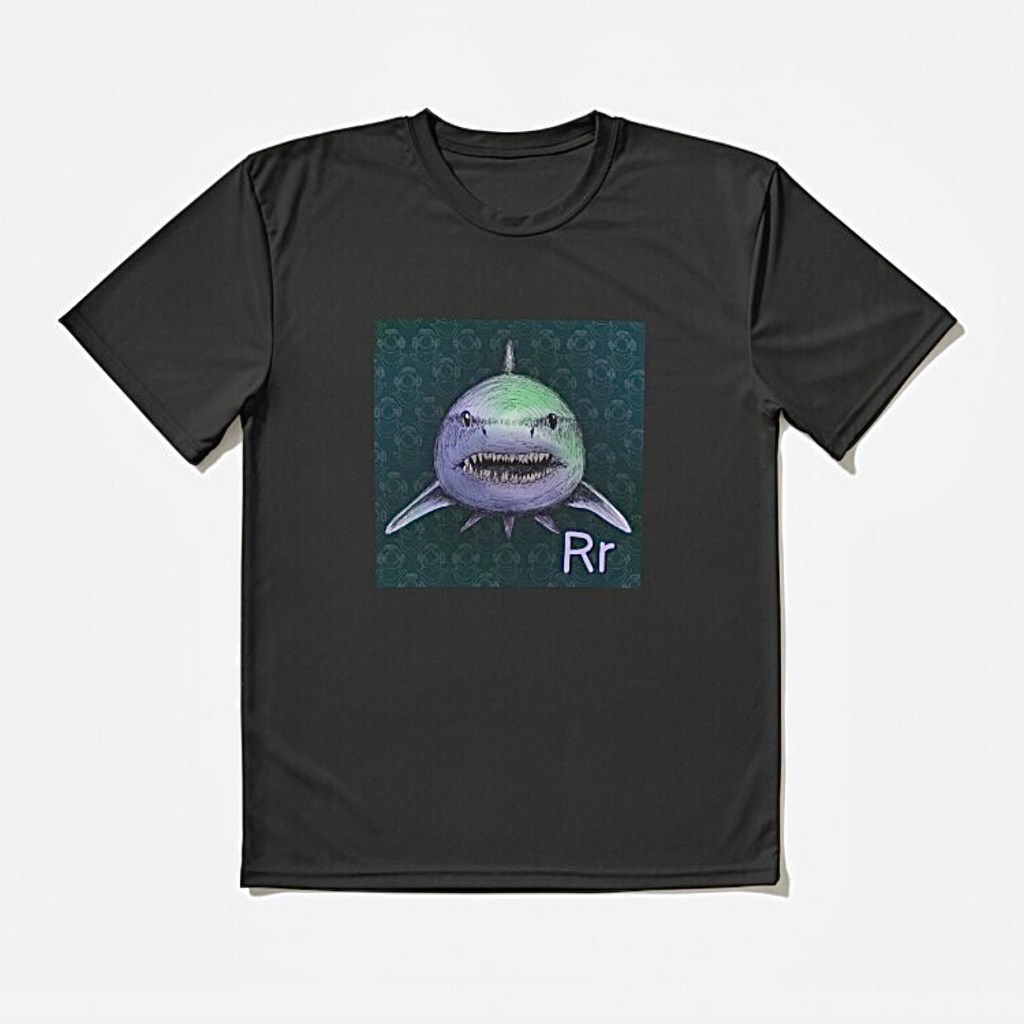
That sense of wonder is one reason I added the Ragged Toothed Shark to my Uncommon Animals of the Alphabet series. R is for Ragged Toothed Shark. On first glance it looks exactly like the kind of creature designed to frighten people. Its teeth protrude from its mouth even when it is closed, giving it a permanently intimidating expression. It looks like it should be starring in a horror film. Yet when you spend time learning about it, you discover a creature far more interesting than its reputation suggests.
I keep finding that pattern with uncommon animals. The creatures that initially seem strange, ugly or frightening often become the most fascinating once you move beyond first impressions. Fear tends to live at a distance. Curiosity requires us to move closer. The closer I look at nature, the less interested I become in labels like dangerous, ugly or scary. Those words tell us more about ourselves than they do about the animals.
Thankfully, attitudes towards sharks are changing. Around the world there are scientists, conservation groups, divers, photographers and everyday people working to protect shark populations and better understand their role in marine ecosystems. There is growing recognition that healthy oceans need healthy shark populations. Rather than viewing sharks as enemies, more people are beginning to see them as an essential part of the natural systems that keep our oceans functioning.
That shift gives me hope because sharks have paid a heavy price for our fear. Many species face serious threats from overfishing, habitat loss and practices that value parts of the animal more than the animal itself. Yet there is also good news. Marine protected areas are expanding in some regions. Research is improving our understanding of shark behaviour. New technologies are helping improve human safety while reducing harm to sharks. Slowly, imperfectly and not nearly fast enough, the story is beginning to change.
International Shark Day feels like a good opportunity to celebrate that change. Not because sharks need a public relations campaign, but because humans need reminding that the world is full of creatures that deserve more than our assumptions. Sharks are not villains. They are not monsters. They are ancient survivors carrying hundreds of millions of years of evolutionary history through the oceans of our planet.
I still do not particularly want to encounter one while swimming in deep water. Some instincts are stubborn and probably always will be. But these days, alongside the fear, there is something else. There is admiration. There is curiosity. There is wonder. And perhaps that is the real value of days like this. Not to convince us that sharks are harmless, but to remind us that the things we fear most often become the things we admire most once we take the time to look a little closer.

